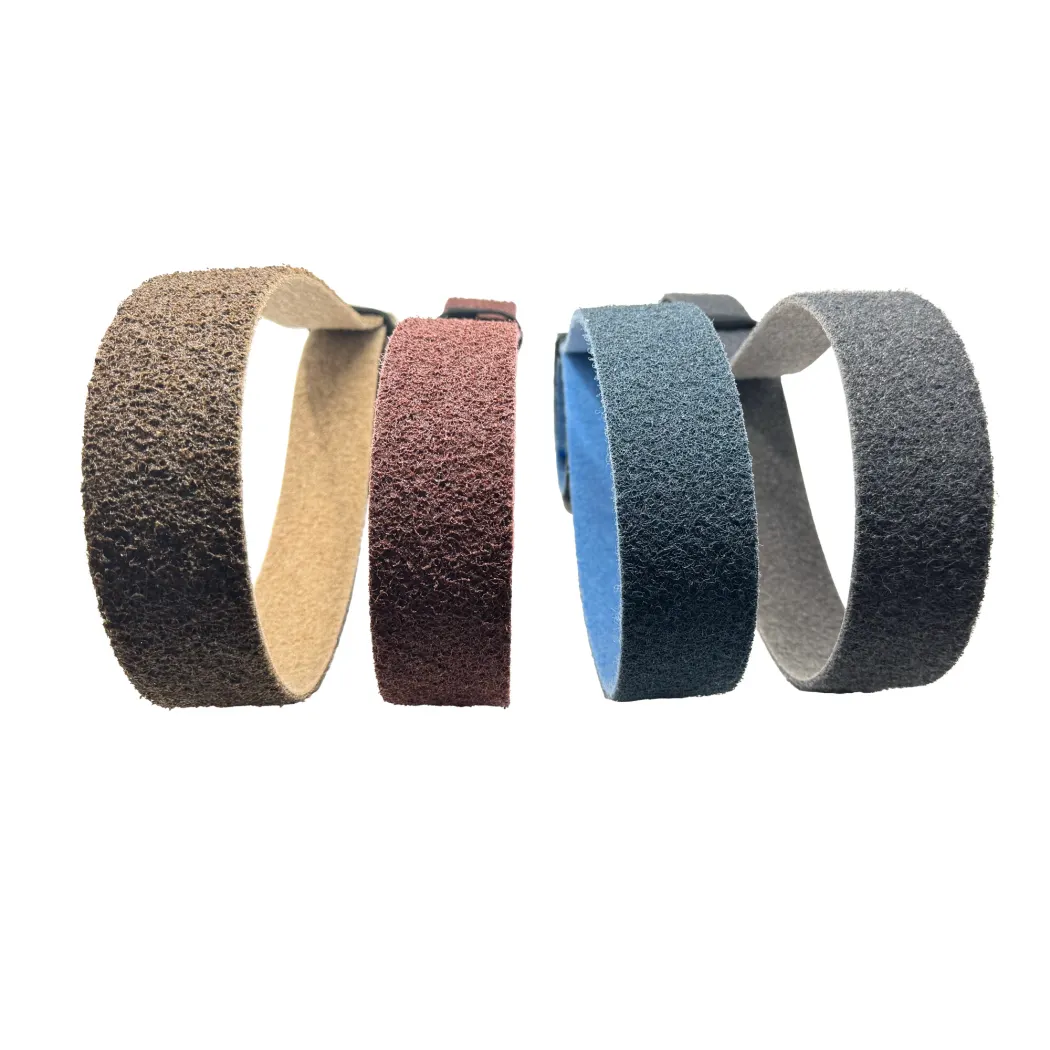
A good satin finish starts before the conditioning belt goes on. Look at the blade under a shop light. If you can still pick out a deep bevel scratch, go back to the last sanding grit that will remove it. Once the scratch pattern is even, a 2x72 surface conditioning belt can blend it into the finish you want.
1. Prep the blade before you blend
Finish the shaping and get the flats and bevels to an even scratch pattern. Try 180 or 220 grit as a prep step after 120, then go finer if the marks still show through a test pass. Inspect the heel, tip and plunge under angled light. If you’re still working through coarse marks, start with our 2x72 grit progression guide.
2. Choose the grade by the finish you want
- Coarse (brown) for a more pronounced brushed texture or a first blending pass. Try it on scrap first if the blade already has a fine scratch pattern.
- Medium (maroon) for a visible satin grain. A good starting point if you want the brush lines to read clearly.
- Fine (blue) for a softer satin appearance on an evenly prepped blade. Start here if your prep is already fine and you want a subtler grain.
- Ultra Fine (grey) for the least pronounced texture of the four. Try it when you want a softer sheen or want to take the texture down another step.
These are conditioning grades. Choose by the finish on your steel. If you’re comparing grades, the four-grade surface conditioning kit includes one of each. Once you’ve picked a finish you want to repeat, the single-grade three-pack lets you restock that grade.
3. Keep your last passes consistent
Test on scrap of the same steel with the same prep if you have it. With the belt running within the maker’s limits, use light pressure and steady, overlapping passes. Keep your final strokes in the same direction on each face. Keep moving near the heel and tip, where a pause or extra pressure can leave a bright patch or soften a crisp line.
Step away from the moving belt, wipe the blade and tilt it under the same light you used to check your prep. If the grain looks even from heel to tip, you can stop at that grade. If you see one deep line cutting across the finish, return to the prep step and remove it. For a lengthwise satin that’s hard to achieve on your grinder, finish by hand in straight passes along the blade.