Choose the part of your grinder that supports the belt before you pick a grit. A belt running over a flat plate makes different contact from the same belt running over a wheel or between two wheels. Decide what shape you want to keep or create, then pick the contact surface for that job.
| Setup | What supports the belt | Where it helps |
|---|---|---|
| Flat platen | A flat plate behind the belt. | Blade flats, flat tangs and flat bevels. |
| Contact wheel | A wheel behind the belt at the point of contact. | Hollow grinds. The wheel diameter affects the curvature. |
| Slack belt | An unsupported span between wheels. | Rounded handles, convex work and blending curves. |
Use the platen when the surface should stay flat
The platen is a flat reference behind the belt. If you are cleaning up a tang or a flat bevel, inspect where the fresh scratches land after a light pass. A small strip of fresh scratches can show that only part of the face is meeting the belt. Check the work’s position and the surface before trying to erase that strip by sanding the whole part finer.
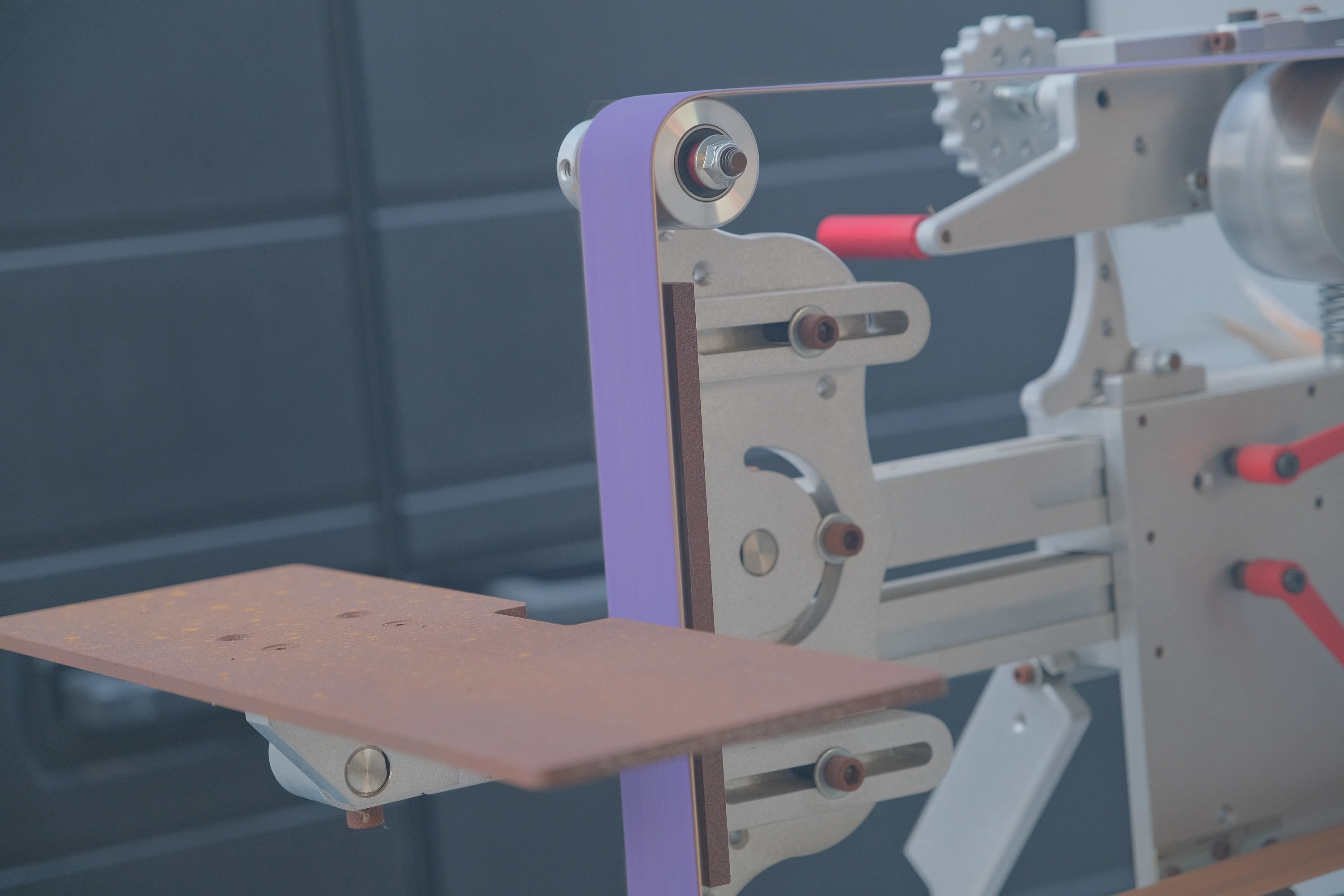
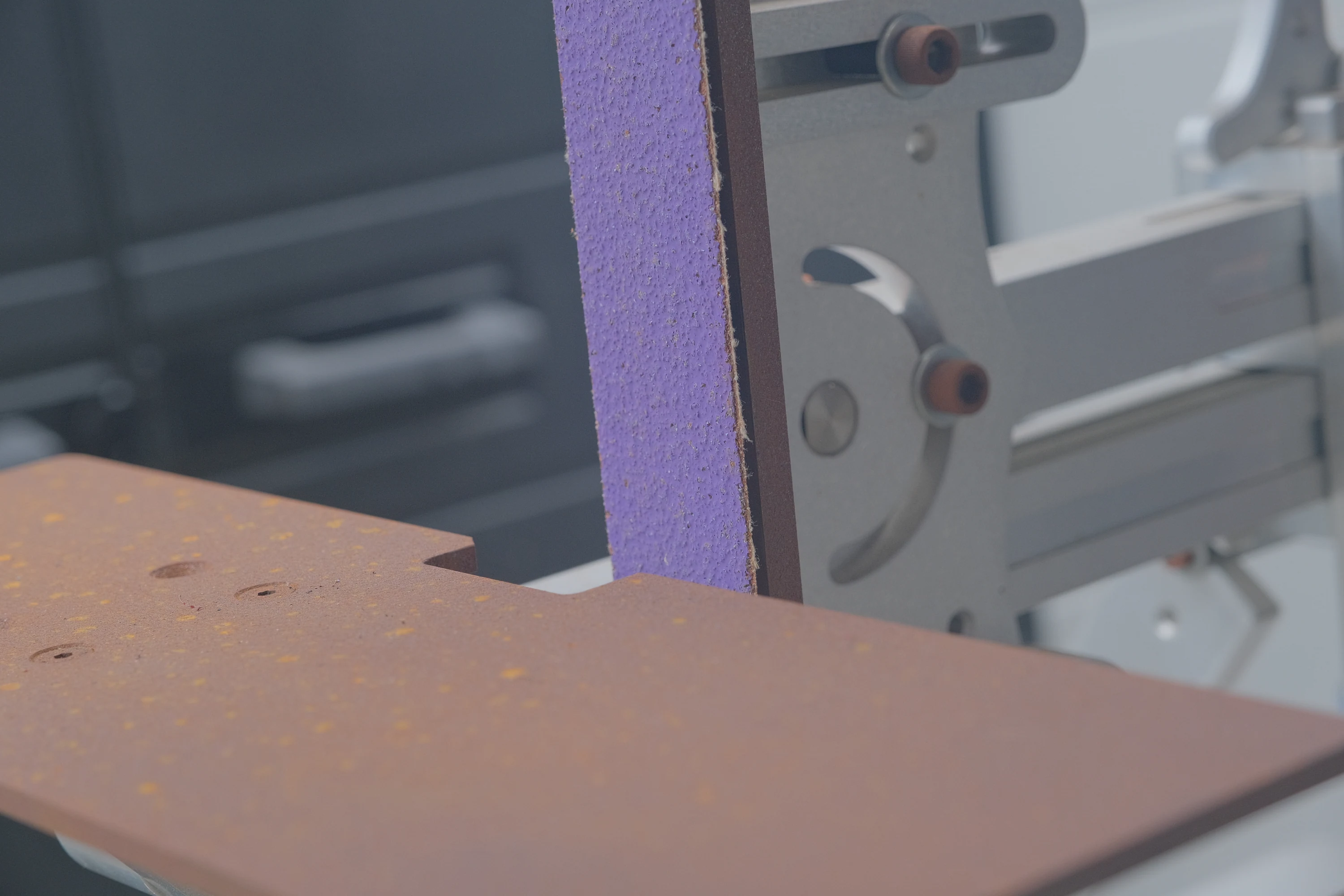
Some knifemakers use a firmer belt on the platen to keep flat areas and transitions defined. Others use a flexible belt for detail work on a supported setup. The platen still supplies the flat reference. Backing flexibility matters most where the belt is free to bend around an edge or contour.
Use a contact wheel when you want a hollow
The belt follows the wheel at the contact point. That curved contact can leave a concave bevel, often called a hollow grind. Wheel diameter changes the curvature, and the way you present the blade affects whether the hollow stays consistent from heel to tip.
Try the setup on scrap and inspect the contact pattern along the whole pass. If the hollow changes near the tip, check the work position and support before moving to a finer grit. A cleaner scratch pattern will leave the existing shape visible.
Use a slack belt where the work should round
An unsupported span deflects around a curve. That can help on a rounded handle or a convex surface. It can also soften a corner if the belt wraps farther than you intended. Check the contact with the grinder stopped, then test on scrap if the curve sits next to an edge you want to keep crisp.
Once you have chosen the attachment, compare X-weight and J-Flex backing for the pass you need.